
Viking tattoos carry real weight. They’re tied to courage, fate, and a connection to Norse mythology that still resonates today.
Here’s something most guides skip: not every “Viking” symbol is actually from the Viking Age. The Vegvísir and the Helm of Awe, two of the most popular Viking tattoo choices, first appear in Icelandic grimoires from the 17th to 19th centuries, hundreds of years after the Vikings themselves. You can see the full breakdown on Wikipedia’s overview of Icelandic magical staves, sourced from the Galdrabók manuscript tradition. That doesn’t make them less meaningful, but it’s worth knowing before you tell people your tattoo is “ancient Norse.”
In this guide, we’ll cover what Viking tattoos really mean, which symbols are genuinely Viking Age, and which come from later folklore.
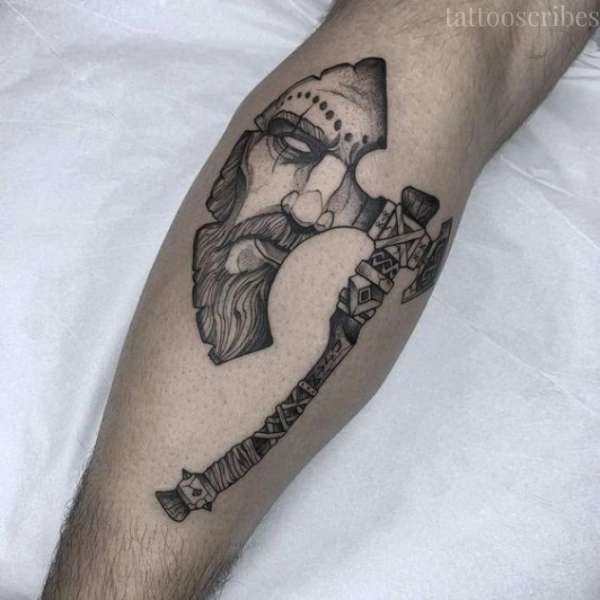
What Do Viking Tattoos Mean?
A Viking tattoo meaning represents courage, loyalty, and faith in fate. It’s a mark of inner strength and readiness to face life’s battles with determination and pride.
General Symbolism of Viking Tattoos
- Courage – Reflects fearlessness and the will to overcome hardship.
- Honor – Represents loyalty to family, clan, and values.
- Protection – Invokes Norse symbols to guard against harm.
- Fate (Wyrd) – Belief in destiny guiding life’s path.
- Strength – Embodies endurance and warrior resilience.
- Spiritual Power – Connects the bearer to Norse gods and ancestral spirits.
You may also like below posts:
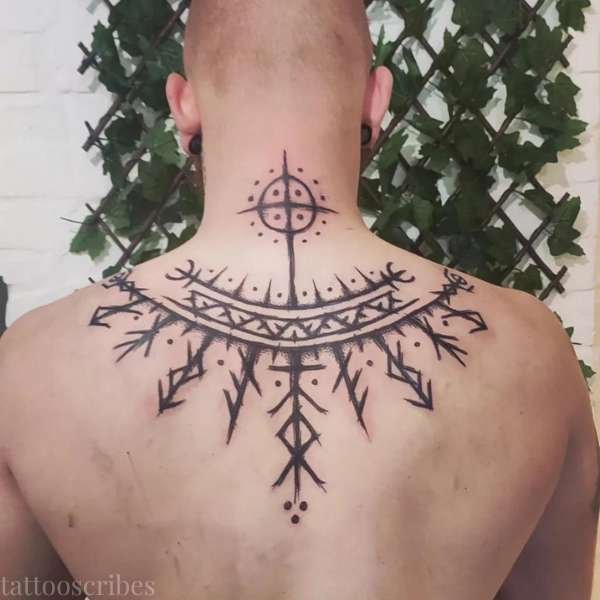
Cultural Meanings of Viking Tattoos
- Norse Warriors – Tattoos were a sign of bravery and battlefield protection.
- Runes and Symbols – Each rune carried magic and fate-altering power.
- Mythology – Designs honored gods like Odin, Thor, and Freyja.
- Sailor Protection – Vikings believed tattoos safeguarded them at sea.
- Afterlife Belief – Markings symbolized the journey to Valhalla after death.

Viking Tattoo Variations and Designs
- Vegvísir (Compass) – Guides you safely through life’s storms.
- Helm of Awe (Ægishjálmur) – Symbol of invincibility and protection.
- Odin’s Ravens (Huginn & Muninn) – Wisdom and spiritual insight.
- Yggdrasil (Tree of Life) – Interconnectedness of all existence.
- Valknut – Represents life, death, and rebirth.
- Runes – Each carries a personal or magical meaning.
Read more about choosing the right Viking tattoo artist here.
Color Variations of Viking Tattoo
- Black/Grey – Strength and endurance.
- Red – Courage and energy.
- Blue – Spiritual protection and trust.
Explore more aftercare tips here.
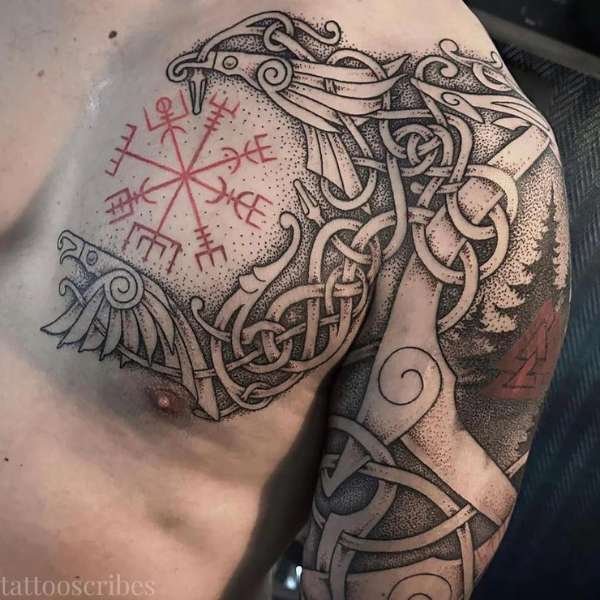
Other Symbolic Meanings of Viking Tattoos
- Transformation – Overcoming fear and personal trials.
- Spiritual Growth – Seeking wisdom through experience.
- Unity – Connection to community and shared history.
- Legacy – Honoring ancestors and their strength.
- Freedom – Living fearlessly and following one’s destiny.
Meaningful Placement Ideas
- Chest – Courage and personal pride close to the heart.
- Arm/Forearm – Strength, visibility, and readiness for battle.
- Back – Spiritual protection from unseen forces.
- Leg/Calf – Connection to journeys and exploration.
- Neck/Behind Ear – Symbolic of divine whisper or intuition.
Frequently Asked Questions About Viking Tattoos
What does a Viking tattoo symbolize?
It stands for courage, honor, and destiny guided by Norse mythology.
Is it okay to get a Viking tattoo today?
Yes, as long as it’s done respectfully toward Norse heritage.
What is the most powerful Viking symbol?
The Helm of Awe is often seen as the strongest protective symbol.
Do Viking tattoos have religious meaning?
Yes, they reflect beliefs in Norse gods, fate, and life after death.
What are the best Viking tattoos for protection?
The Vegvísir and Helm of Awe are both known as powerful talismans.
Are Viking tattoos only for men?
No, many women choose Norse designs for empowerment and resilience.
Final Verdict
A Viking tattoo carries weight, whether it’s a rune, a hammer, or a wayfinder. But part of respecting that history is getting it right.
Some of the most popular “Viking” symbols, like the Vegvísir and the Helm of Awe, actually come from Icelandic folk magic centuries after the Viking Age ended. That’s not a reason to skip them. It’s a reason to know the real story behind your ink, so you can talk about it with the same confidence you wear it.