
A Hannya tattoo looks fierce, but its meaning runs deeper than “scary demon mask.” The design comes from Noh theater, Japan’s centuries-old masked drama, where the Hannya represents a woman transformed by jealousy and grief into something monstrous. Wesleyan University’s East Asian collections page has a good rundown of the mask’s traditional use and what its features actually represent.
That mix of rage and sorrow is exactly why the tattoo has stuck around. In this guide, we’ll cover what a Hannya tattoo means, what the different colors symbolize, and how to choose a design that fits what you’re trying to say.
What Does a Hannya Tattoo Mean?
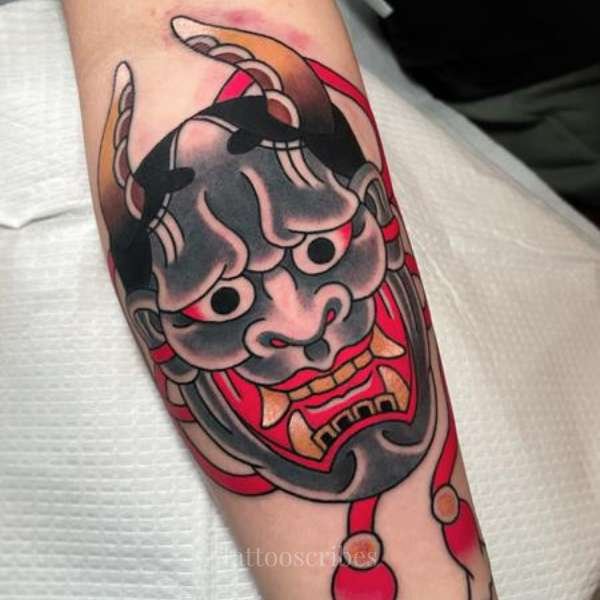
A Hannya tattoo represents jealousy, anger, and emotional complexity. It also conveys protection from evil spirits and the duality of human emotions, balancing darkness and enlightenment.
General Symbolism of Hannya Tattoos
- Emotional Depth – Represents intense feelings of jealousy, rage, and sorrow.
- Transformation – Reflects overcoming emotional struggles and personal growth.
- Protection – Wards off evil spirits and harmful intentions.
- Duality – Shows the balance between human anger and inner wisdom.
- Mystery – Symbolizes hidden truths and the complexity of human nature.
Cultural Meanings of Hannya Tattoos
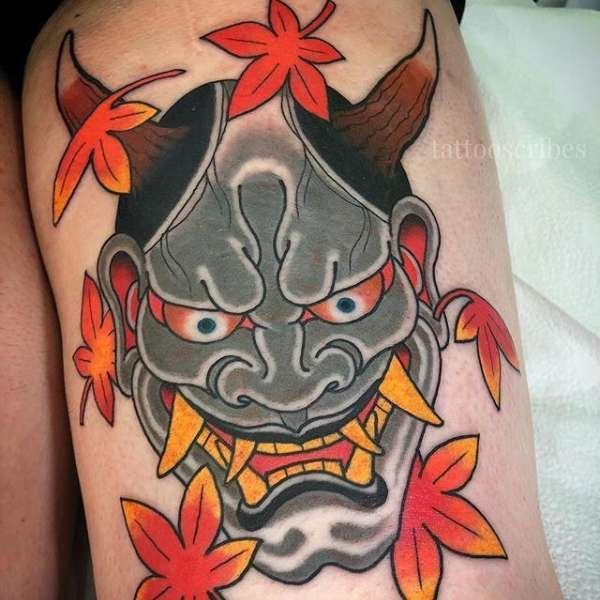
- Japanese Noh Theater – Hannya masks depict vengeful female spirits.
- Traditional Folklore – Represents the transformation from love to jealousy.
- Spiritual Beliefs – Believed to ward off evil while revealing truth.
- Artistic Expression – Shows respect for Japanese culture and performance art.
- Modern Influence – Used as a tattoo to symbolize strong emotions or protection.
You may also like below posts:

Hannya Tattoo Variations and Designs
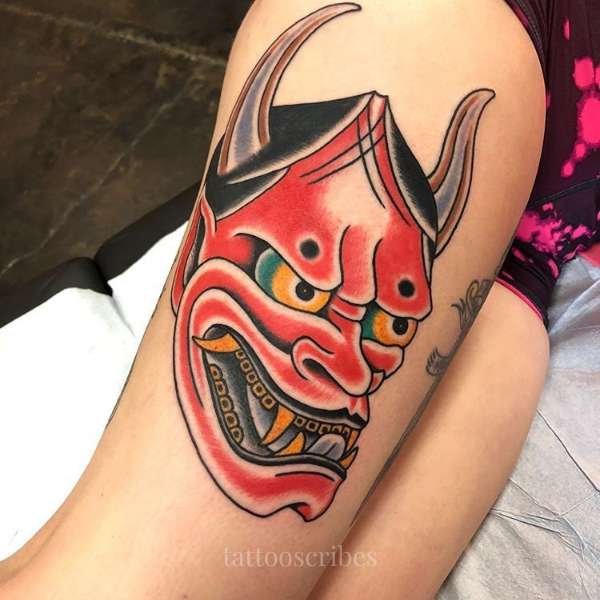
- Red Hannya – Anger, passion, and strong emotional energy.
- Blue or Black Hannya – Sadness, calm, or mysterious aspects.
- Golden Hannya – Wisdom, enlightenment, or high spiritual energy.
- Full Mask Design – Complete facial depiction of the Hannya mask.
- Partial/Abstract Design – Focused on eyes, horns, or mouth for artistic effect.
- Combined Designs – Hannya with flowers, waves, or dragons for added symbolism.
Learn more about selecting a Hannya tattoo artist here.
Other Symbolic Meanings of Hannya Tattoos
- Inner Strength – Represents endurance through emotional turmoil.
- Awareness – Encourages self-reflection and confronting one’s feelings.
- Protection – Acts as a talisman against negativity or harm.
- Passion – Reflects intensity in love, life, and personal relationships.
- Mysticism – Tied to spiritual growth and understanding human nature.
Discover detailed aftercare tips here.
Meaningful Placement Ideas
- Upper Arm/Shoulder – Displays strength and emotional depth.
- Back – Large, detailed designs symbolizing personal journey.
- Chest – Close to the heart, reflecting inner struggles.
- Thigh or Leg – Personal symbolism in a semi-private area.
- Forearm – Visibility for balance between protection and expression.
Frequently Asked Questions About Hannya Tattoos
What does a Hannya tattoo symbolize?
It symbolizes jealousy, transformation, and protection from evil spirits.
Are Hannya tattoos only for women?
No, they are gender-neutral and represent universal human emotions.
What colors are used in Hannya tattoos?
Red, black, blue, and gold reflect different emotions and spiritual aspects.
Is a Hannya tattoo considered scary?
It can look intimidating, but it also conveys protection and strength.
Can Hannya tattoos be combined with other designs?
Yes, they are often paired with flowers, waves, or dragons for extra symbolism.
Final Thought
A Hannya tattoo isn’t just a striking image, it’s borrowed from a character with a real story. That story matters, because the mask was built to hold two expressions at once: rage from one angle, grief from another. That duality is the whole point.
If you’re drawn to a Hannya design, think about which side of that story you want your tattoo to carry, the anger, the sorrow, or the transformation between them. It’ll change how you approach color, size, and what you pair it with.