
A death angel tattoo looks dark, but it usually means something hopeful. It’s less about death itself and more about what comes after: rebirth, peace, and holding on to someone you’ve lost.
This idea shows up across cultures in different ways. In Mexican tradition, similar imagery connects to Día de los Muertos, where the Smithsonian notes death was seen as part of life’s journey rather than the end of it. That same idea, death as a passage rather than a full stop, runs through most death angel symbolism today.
In this guide, we’ll cover what a death angel tattoo really means, popular design variations, and where to place it for the most meaning.

What Does a Death Angel Tattoo Mean?
A death angel tattoo symbolizes the connection between mortality and spiritual rebirth. It reflects courage in facing loss, accepting change, and finding peace in life’s cycle.
General Symbolism of Death Angel Tattoos
- Life and Death – Represents the delicate balance between existence and eternity.
- Protection – Seen as a guardian watching over souls and loved ones.
- Transformation – Marks the transition from one stage of life to another.
- Spiritual Rebirth – Signifies rising above pain and renewal after loss.
- Remembrance – Honors departed loved ones while embracing healing.

Cultural Meanings of Death Angel Tattoos
- Christian Symbolism – Angels of death serve as messengers guiding souls to heaven.
- Mexican Traditions – Similar to Día de los Muertos, honoring life after death.
- Gothic Art – Reflects fascination with mortality and spiritual beauty.
- Japanese Influence – Death spirits (Shinigami) symbolize balance and destiny.
- Modern Western View – A reminder of mortality and appreciation for life.

Death Angel Tattoo Variations and Designs
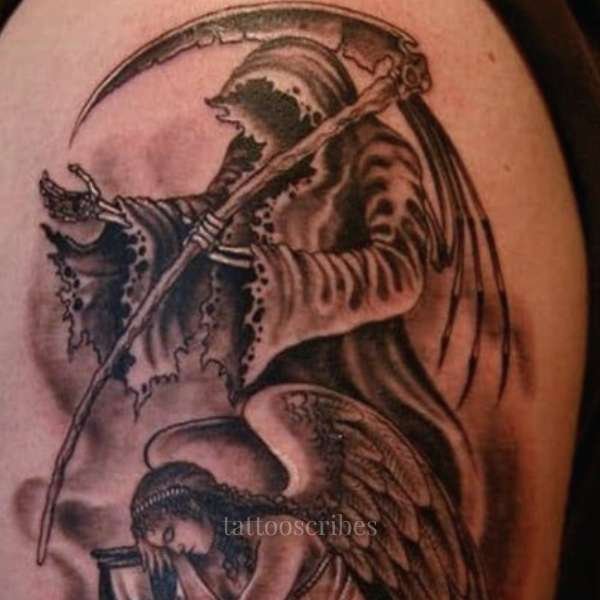
- Winged Angel of Death – Symbolizes divine power and transition.
- Grim Reaper Style – Represents the inevitability of death and wisdom from loss.
- Angel with Scythe – Balances fear and protection.
- Fallen Angel Design – Reflects inner struggle, redemption, and transformation.
- Angel Holding a Rose – Blends sorrow with love and remembrance.
Learn more about choosing the best artist here.
Color Variations of Death Angel Tattoo
- Black/Grey – Mystery, mourning, and strength.
- White – Peace and spiritual purity.
- Red Accents – Passion, sacrifice, and eternal connection.
Explore detailed aftercare tips here.
Other Symbolic Meanings of Death Angel Tattoos
- Courage in Loss – Strength to face grief and move forward.
- Acceptance – Understanding that death is part of the soul’s journey.
- Hope Beyond Death – Faith in reunion or spiritual continuation.
- Inner Strength – Triumph over emotional or personal hardship.
- Balance of Light and Dark – Embracing both pain and peace in existence.
Meaningful Placement Ideas
- Chest – Honors love and remembrance close to your heart.
- Back – Represents divine protection from behind.
- Arm/Forearm – Displays strength and courage.
- Leg – Symbolizes life’s ongoing journey.
- Neck – Shows spiritual awareness and acceptance of fate.
You may also like below posts:
Frequently Asked Questions
Is a death angel tattoo considered dark or negative?
Not always — it can represent peace, acceptance, and protection in the face of death.
What does an angel of death symbolize?
It embodies transition, divine guidance, and the cycle of life and death.
Are death angel tattoos religious?
They often draw from both spiritual and artistic interpretations of mortality.
Can women get death angel tattoos?
Absolutely — they often symbolize strength through loss and emotional rebirth.
What design suits remembrance tattoos best?
An angel holding a rose or candle beautifully expresses eternal memory and love.
What color fits a death angel tattoo most?
Black and grey are classic, but white or red accents can deepen symbolic meaning.
Last word
A death angel tattoo carries weight, but not the kind most people expect. It’s less about fear and more about how someone chooses to make peace with loss, change, or their own mortality.
The design details matter here more than most. A fallen angel says something different than an angel holding a rose, and a grim reaper style leans into a different feeling entirely than a winged guardian figure. Take the time to pick the version that actually matches what you’re trying to say, not just the one that looks striking in a stencil.
If you’re getting this tattoo for someone you’ve lost, talk to your artist about incorporating a personal detail, a name, a date, a flower that meant something to them. It’s what turns a striking design into one that means something only to you.