
An angel tattoo means more than a pretty design with wings. For most people, it’s protection, faith, or a way to carry someone they’ve lost a little closer.
Angels show up across nearly every major religion, not just Christianity. Britannica’s overview of angels covers how Judaism, Christianity, and Islam each describe angels as messengers between heaven and earth, which is part of why this symbol resonates so widely, no matter your background.
In this guide, we’ll walk through what angel tattoos mean, the different types (guardian, fallen, archangel, and more), and how placement and color can shape the meaning even further.
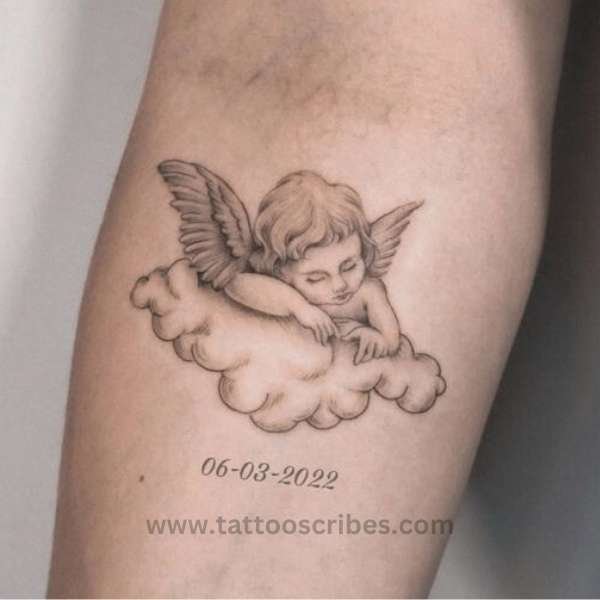
What Does an Angel Tattoo Mean?
An angel tattoo meaning represents spiritual protection, divine love, and guidance. It often signifies the connection between heaven and earth, showing your trust in higher power or remembrance of a loved one.
General Symbolism of Angel Tattoos
- Protection – Angels serve as guardians against evil and misfortune.
- Faith – A reminder of your spiritual beliefs and hope in divine strength.
- Love and Compassion – Reflects unconditional love and purity of spirit.
- Remembrance – Honors someone who has passed, symbolizing they still watch over you.
- Guidance – Shows the light that leads you through life’s hardest paths.
- Freedom – Wings symbolize liberation and rising above pain or challenges.

Cultural Meanings of Angel Tattoos
- Christianity – Angels are messengers of God, representing divine will and protection.
- Judaism and Islam – Symbolize obedience, duty, and the eternal link between heaven and humanity.
- Renaissance Art – Depicts purity, innocence, and divine beauty.
- Modern Beliefs – Often linked to personal transformation and healing from loss.
- Pop Culture – Angels can symbolize rebellion (fallen angels) or empowerment (warrior angels).
You may also like below posts:
Angel Tattoo Variations and Designs
- Guardian Angel Tattoo – Symbol of divine protection and comfort.
- Fallen Angel Tattoo – Represents rebellion, regret, or redemption.
- Angel Wing Tattoo – Freedom, elevation, or memory of a loved one.
- Archangel Tattoo – Power and spiritual leadership (like Michael or Gabriel).
- Baby Angel (Cherub) – Innocence, new beginnings, and pure love.
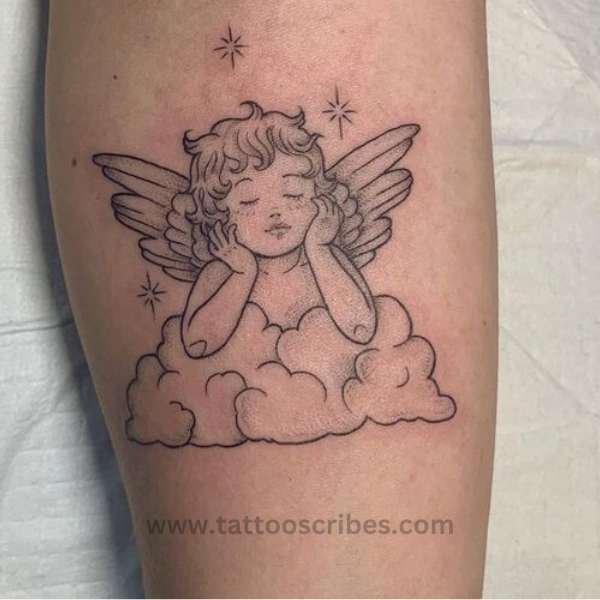
Color Variations of Angel Tattoo
- White – Purity and divine protection.
- Black/Grey – Mystery, mourning, or strength through hardship.
- Gold – Enlightenment and divine wisdom.
Learn more about selecting the perfect angel tattoo artist here.
Other Symbolic Meanings of Angel Tattoos
- Rebirth – Rising from struggles and finding light again.
- Inner Peace – A calming symbol for those seeking emotional healing.
- Spiritual Awakening – Represents opening your heart to divine truth.
- Moral Strength – Staying true to your values despite temptation.
- Hope – Belief in light after darkness.
Read more about aftercare for angel tattoos here.
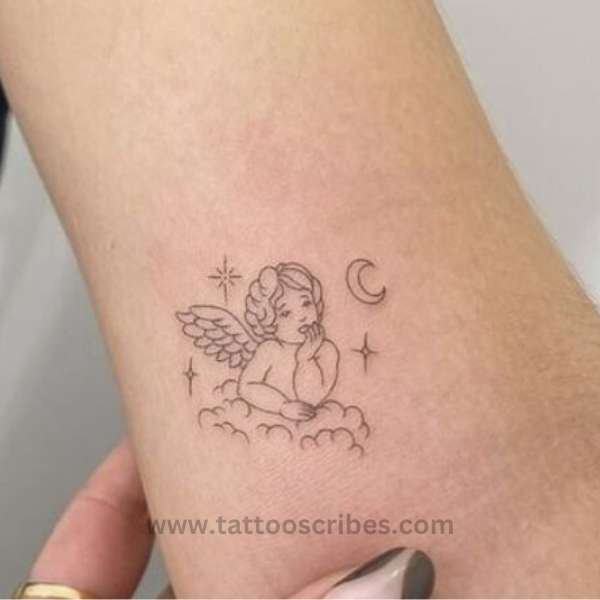
Meaningful Placement Ideas
- Chest – Closeness to the heart and divine protection.
- Back – Guardian angels watching over from behind.
- Arm/Shoulder – Strength and guidance visible in daily life.
- Neck – Connection between spiritual and physical self.
- Ribcage – Deep emotional meaning, often tied to loss or love.
Frequently Asked Questions About Angel Tattoos
What does a fallen angel tattoo mean?
It symbolizes loss, regret, or the journey to redemption.
Is an angel tattoo religious?
Not always — it can represent spirituality, protection, or remembrance.
Can men and women both get angel tattoos?
Yes, it’s a unisex design with deep spiritual meaning for anyone.
What do angel wings symbolize?
They represent freedom, transcendence, and divine guidance.
Are angel tattoos good for memorials?
Absolutely — they’re one of the most meaningful tribute tattoos.
Final Thoughts
An angel tattoo carries weight most designs don’t. It’s not just a pretty image, it’s usually standing in for something bigger: faith, loss, protection, or a version of yourself you’re trying to hold onto.
That’s part of why this symbol works across so many belief systems and personal stories at once. A guardian angel means something different to someone who wears it for protection than it does to someone wearing it for a parent they lost, and both are valid.