
A mandala tattoo is more than a pretty pattern. It’s a circle built from repeating shapes, and in the traditions it comes from, that circle stands for balance, the universe, and the path to enlightenment.
Mandalas have deep roots in Buddhism and Hinduism, where monks still hand-build them from colored sand as a meditation practice. You can see how that tradition works in the Smithsonian’s overview of Tibetan Buddhist sand mandalas.
In this guide, we’ll cover what a mandala tattoo means, the culture behind it, and popular design and placement ideas to help you choose one that fits your story.
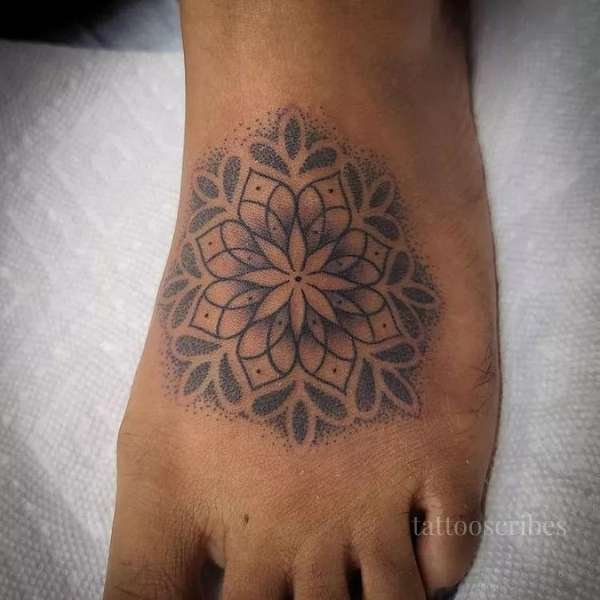
What Does a Mandala Tattoo Mean?
A mandala tattoo represents balance, unity, and spiritual enlightenment. It often reflects personal growth, mindfulness, and connection with the universe. Mandalas also symbolize the cycle of life and harmony within oneself.
General Symbolism of Mandala Tattoos
- Balance – Represents equilibrium in life, mind, and spirit.
- Harmony – Shows alignment between inner self and outer world.
- Spiritual Growth – Reflects self-discovery and enlightenment.
- Unity – Symbolizes connection between all living things.
- Cycle of Life – Depicts life’s natural rhythms and continuity.
You may also like below posts:

Cultural Meanings of Mandala Tattoos
- Buddhism – Mandalas are used in meditation for focus and spiritual insight.
- Hinduism – Represents cosmos, divine balance, and sacred geometry.
- Tibetan Tradition – Used as spiritual tools for healing and guidance.
- Native Cultures – Circular patterns symbolize unity, protection, and cycles.
- Modern Interpretation – Often seen as symbols of mindfulness and personal growth.
Mandala Tattoo Variations and Designs
- Geometric Mandalas – Focus on precision, symmetry, and spiritual symbolism.
- Floral Mandalas – Combines nature with circular patterns for beauty and balance.
- Dot work Mandalas – Tiny dots create intricate patterns with depth.
- Blackwork Mandalas – Bold outlines for striking contrast and symbolism.
Color Variations of Mandala Tattoo
- Red – Energy and vitality.
- Blue – Calm, wisdom, and clarity.
- Yellow – Joy, positivity, and creativity.
Other Symbolic Meanings of Mandala Tattoos
- Meditation & Mindfulness – Encourages focus and inner peace.
- Protection – Circular patterns are seen as shields against negative energy.
- Creativity – Expresses personal style and artistic vision.
- Healing – Represents emotional recovery and spiritual renewal.
- Personal Journey – Marks self-discovery, growth, and transformation.
Meaningful Placement Ideas
- Back – Large designs for maximum detail and spiritual significance.
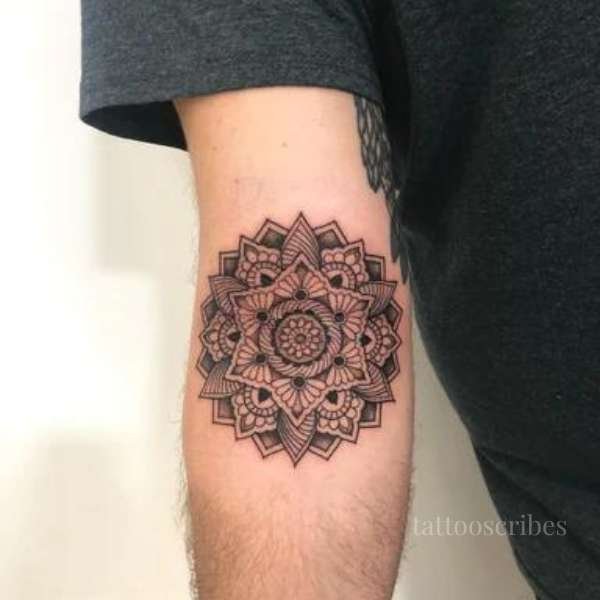
- Forearm – Visible balance and harmony reminder.
- Chest – Close to the heart for emotional and spiritual meaning.
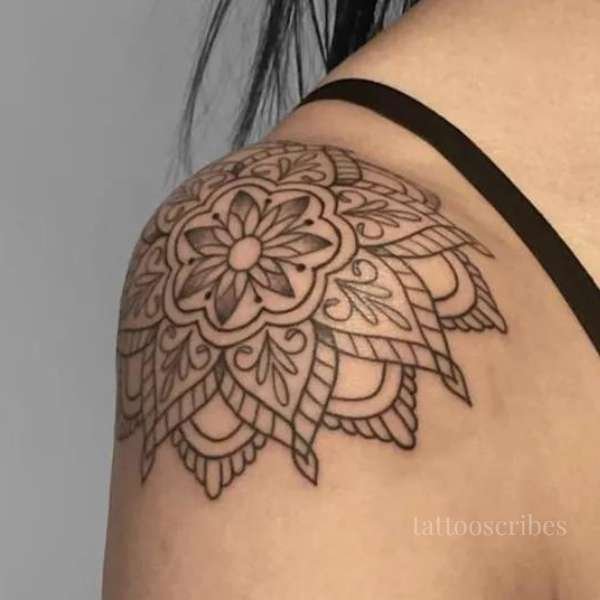
- Shoulder – Strength, guidance, and personal growth symbolism.
- Wrist/Ankle – Smaller designs for subtle mindfulness cues.
Frequently Asked Questions
What does a mandala tattoo symbolize?
It symbolizes balance, harmony, spiritual growth, and life’s interconnectedness.
Are mandala tattoos spiritual?
Yes, they are used in meditation and reflect mindfulness and inner peace.
Which color is best for mandala tattoos?
Red, blue, and yellow are popular for energy, calm, and creativity.
Where is a mandala tattoo best placed?
Back, chest, forearm, shoulder, wrist, or ankle are common symbolic locations.
Do mandala tattoos have cultural meaning?
Yes, they are significant in Buddhism, Hinduism, Tibetan traditions, and other cultures.
Can a mandala tattoo represent personal growth?
Absolutely, it reflects self-discovery, transformation, and spiritual balance.
Wrap-up
A mandala tattoo holds up well over time, and not just because the linework ages nicely. The meaning behind it, balance, wholeness, the idea that everything circles back to a center, is the kind of thing people actually grow into rather than out of.
If you’re drawn to a mandala, take a little time with the design before you book it. Geometric, floral, dotwork, blackwork, they all read differently, and the right one usually comes down to what feels most like you rather than what’s trending. Talk it through with your artist, and if the spiritual roots interest you, it’s worth reading a bit deeper before the needle touches skin.