
A peacock feather tattoo means a lot of things at once: beauty, protection, and a bit of spiritual awakening. That’s part of why it’s stayed popular for so long. It shows up across cultures too. In Hinduism, it’s tied to Krishna. In Greek mythology, the “eye” pattern comes from the story of Hera and the giant Argus, a myth you can read in full through Theoi Greek Mythology’s collection of ancient sources on Argus Panoptes.
In this guide, we’ll cover what a peacock feather tattoo means, the cultural stories behind it, and how color choice changes the symbolism.
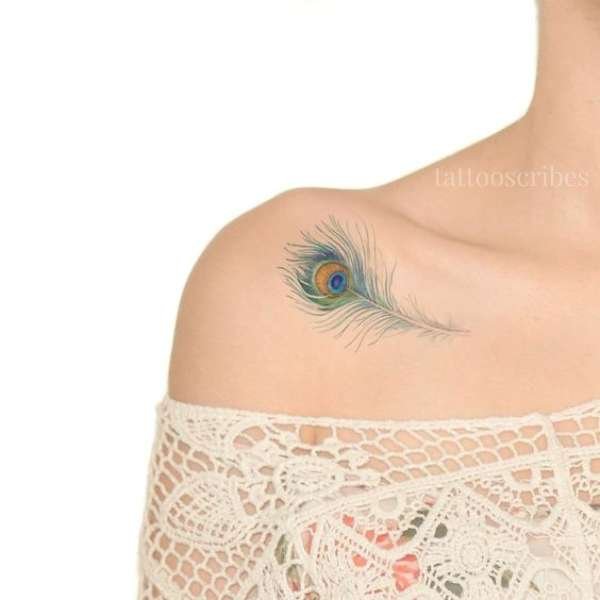
What Does a Peacock Feather Tattoo Mean?
A peacock feather tattoo represents spiritual awakening, self-expression, and protection. It reminds you to stand proud in your individuality and to trust your journey, just like the peacock that displays its feathers with fearless confidence.
General Symbolism of Peacock Feather Tattoos
- Beauty & Pride – Reflects confidence and inner grace.
- Spiritual Awakening – Symbolizes enlightenment and divine connection.
- Self-Expression – Encourages you to show your true colors fearlessly.
- Renewal – Represents rebirth and transformation through challenges.
- Protection – Ancient belief that the “eye” of the feather wards off evil.
- Good Fortune – Seen as a charm bringing prosperity and luck.
You may also like below posts:

Cultural Meanings of Peacock Feather Tattoos
- Hindu Culture – Linked to Lord Krishna, symbolizing love, purity, and kindness.
- Buddhist Beliefs – Represents compassion and the ability to thrive amid hardship.
- Christian Symbolism – Seen as a sign of resurrection and immortality.
- Greek Mythology – Associated with Hera, goddess of beauty and vigilance.
- Asian Traditions – Used as a charm for harmony, grace, and spiritual growth.
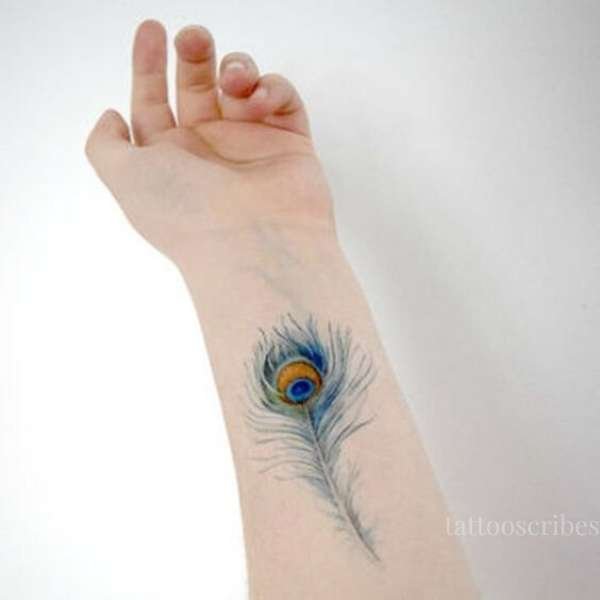
Peacock Feather Tattoo Variations and Designs
- Single Feather – Symbolizes individuality and peace.
- Open Feather Fan – Represents pride, confidence, and courage.
- Peacock Feather with Eye – A powerful symbol of protection and awareness.
- Feather with Name or Word – A personal reminder of love or transformation.
Colored Feather Tattoo
- Blue & Green – Harmony, compassion, and balance.
- Gold Accents – Royalty, wisdom, and spiritual light.
- Black Ink – Mystery and quiet strength.
Learn more about finding the best artist here.
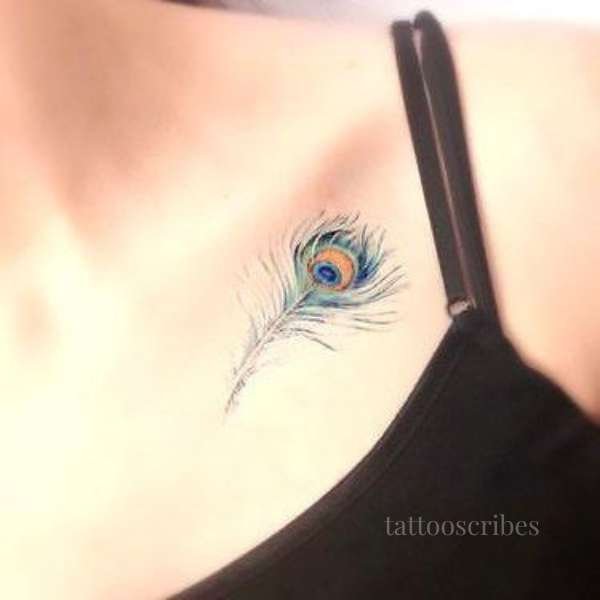
Other Symbolic Meanings of Peacock Feather Tattoos
- Inner Strength – The courage to overcome and shine again.
- Self-Discovery – Embracing who you are beyond fear or doubt.
- Healing – Letting go of pain and finding peace within.
- Transformation – Rising stronger after hardship, like the molting feather.
- Freedom – Living authentically without fear of judgment.
Explore detailed aftercare tips here.
Meaningful Placement Ideas
- Wrist – A gentle reminder of beauty and protection.
- Back – Symbolizes strength and unseen power.
- Neck – Connection to spirit and intuition.
- Thigh or Leg – Represents personal growth and forward movement.
- Shoulder – Balance between inner and outer beauty.
Frequently Asked Questions
Are peacock feather tattoos lucky?
Yes, they’re often seen as symbols of luck, renewal, and divine favor.
What does a peacock feather tattoo symbolize in Hinduism?
It represents purity, love, and Lord Krishna’s protection.
Is it okay to get a peacock feather tattoo for non-Hindus?
Yes — it’s appreciated globally as a symbol of beauty and self-expression.
Can men get peacock feather tattoos?
Absolutely. It reflects courage, strength, and individuality for all genders.
What colors are best for peacock feather tattoos?
Blue, green, and gold tones carry the strongest symbolism of balance and divinity.
Does the peacock feather tattoo have spiritual meaning?
Yes, it often stands for enlightenment, transformation, and spiritual awakening.
Conclusion
A peacock feather tattoo carries more history than its bright colors let on. It’s a symbol that’s meant beauty and divinity in Hindu tradition, watchfulness in Greek myth, and renewal in more than one culture at once. That kind of layered meaning is exactly why it still holds up as a design choice.
If you’re drawn to it, take a minute to think about which meaning actually resonates with you, spiritual awakening, protection, pride, or something more personal, and let the colors and placement follow that, not the other way around.