
A peacock tattoo is about more than its looks. This bird shows up across cultures as a symbol of beauty, pride, and even immortality, and each tradition reads it a little differently.
In Hindu belief, the peacock is tied to Lakshmi, the goddess of prosperity. In Greek mythology, it’s linked to Hera, queen of the gods, whose sacred animals are confirmed to include the peacock. Buddhist and Christian traditions add their own layers, from purity to resurrection.
In this guide, we’ll walk through what a peacock tattoo means across these cultures, plus color choices and placement ideas to help you find a design that fits your story.
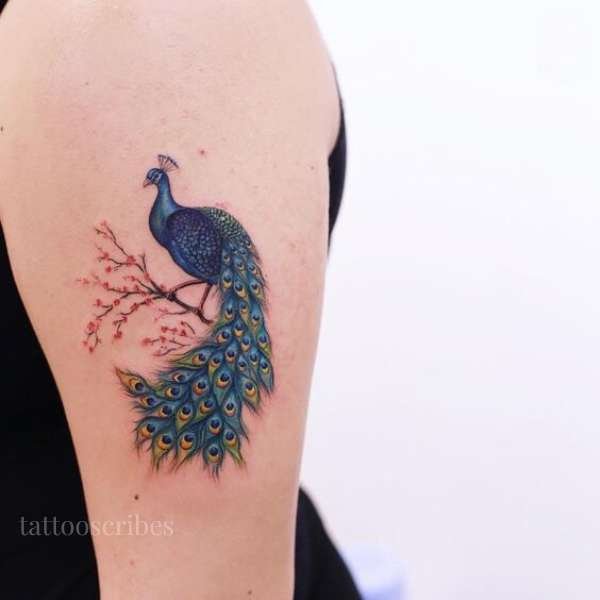
What Does a Peacock Tattoo Mean?
A peacock tattoo represents self-expression, immortality, and inner strength. Across cultures, it’s seen as a sign of transformation and divine protection, celebrating your uniqueness and resilience.
General Symbolism of Peacock Tattoos
- Beauty & Grace – Reflects elegance, charm, and admiration for life’s colors.
- Confidence – Symbolizes pride in who you are without fear of judgment.
- Rebirth – Represents renewal and transformation through challenges.
- Spiritual Awakening – Associated with enlightenment and divine energy.
- Immortality – The feathers symbolize eternal life and continuity.
- Integrity – Reminds you to stay true to yourself and your values.

Cultural Meanings of Peacock Tattoos
- Hindu Culture – Associated with Lakshmi, the goddess of prosperity, beauty, and compassion.
- Buddhism – Symbol of wisdom and purity, as peacocks eat poisonous plants yet remain unharmed.
- Christianity – Represents immortality and resurrection due to the “ever-renewing” feathers.
- Chinese Culture – Brings luck, dignity, and peace; a symbol of high status.
- Greek Mythology – Linked to Hera, goddess of women and marriage, representing vision and pride.
Peacock Tattoo Variations and Designs
- Full-Feathered Peacock – Symbolizes confidence and abundance.
- Single Feather Tattoo – Represents renewal, good fortune, and individuality.
- Minimalist Peacock Design – Ideal for subtle self-expression.
- Peacock Eye Design – Symbol of watchfulness and divine vision.
You may also like below posts:
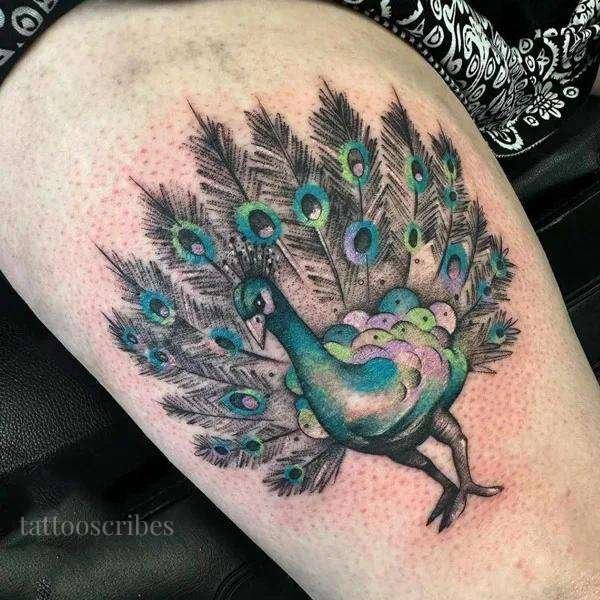
Color Variations of Peacock Tattoo
- Blue & Green – Peace, prosperity, and balance.
- Gold Accents – Royalty and divine power.
- Black & Grey – Mystery, depth, and introspection.
Other Symbolic Meanings of Peacock Tattoos
- Transformation – Growth and becoming your most authentic self.
- Protection – Feathers act as spiritual guardians.
- Freedom – The open plume symbolizes independence and expression.
- Healing – Renewal after emotional or spiritual pain.
- Creativity – A reminder to live boldly and colorfully.
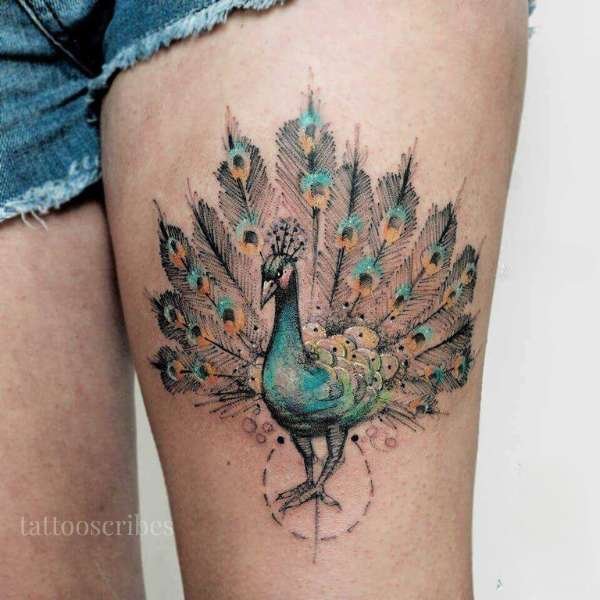
Meaningful Placement Ideas
- Back – Symbolizes strength, power, and freedom of self-expression.
- Arm – Displays pride and confidence openly.
- Thigh – Represents hidden strength and sensuality.
- Neck – Spiritual awareness and openness.
- Ankle or Foot – Life’s journey and personal growth.
Frequently Asked Questions
Are peacock tattoos for both men and women?
Yes, they’re gender-neutral and celebrate individuality and confidence.
What does a peacock feather tattoo mean?
It stands for renewal, good fortune, and protection.
Is a peacock tattoo good luck?
In many cultures, yes — it attracts luck and positive energy.
Can peacock tattoos be black and grey?
Absolutely, monochrome versions emphasize depth and mystery.
What deity is connected to peacocks?
Lakshmi in Hinduism and Hera in Greek mythology.
What does the “eye” in peacock feathers mean?
It symbolizes divine watchfulness, awareness, and spiritual vision.
Wrap-up
A peacock tattoo carries more weight than its color palette suggests. Strip away the feathers and you’ve still got a bird that’s meant beauty, protection, and spiritual awakening across four or five different belief systems, sometimes for very different reasons.
Pick the angle that actually fits you. If you’re drawn to the Hindu connection to Lakshmi, lean into that in your design. If it’s the Greek myth of Hera and Argus that speaks to you, an eye-focused feather design tells that story better than a full bird. The meaning should shape the design, not the other way around.