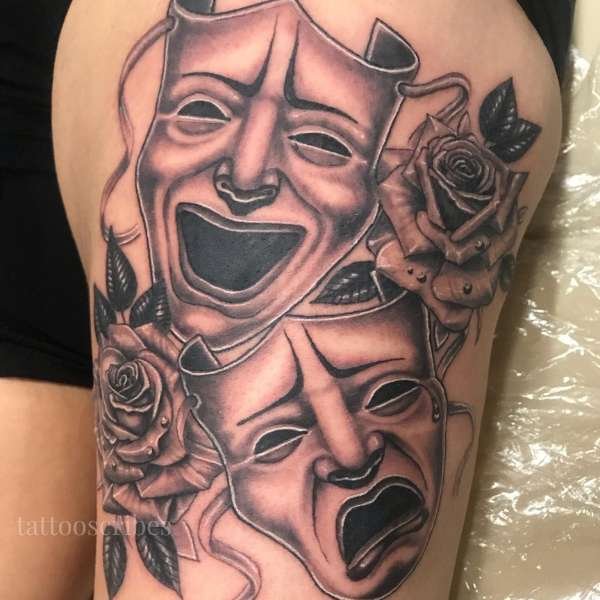
A laugh now cry later tattoo means more than just happy and sad. It’s about holding both feelings at once, and staying strong through whatever life throws at you.
Most sites say this design comes from ancient theater masks. That’s only half the story.
The tattoo itself was actually drawn in 1974 by Freddy Negrete, a Chicano tattoo artist from East Los Angeles, inspired by a 1966 song called “Smile Now, Cry Later.” NPR’s Code Switch has a great interview with Negrete about how it all started.
In this guide, we’ll cover what the tattoo really means, where it comes from, and the most popular design styles today.
What Does a Laugh Now Cry Later Tattoo Mean?
This tattoo represents the balance between happiness and sorrow. It reminds the wearer that life has highs and lows, and strength comes from experiencing both. It often reflects personal growth, resilience, and emotional honesty.
General Symbolism of Laugh Now Cry Later Tattoos
- Duality of Life – Shows that joy and sorrow coexist.
- Resilience – Symbolizes overcoming hardships while appreciating good times.
- Emotional Awareness – Encourages acknowledging and embracing feelings fully.
- Strength – Represents the ability to survive life’s ups and downs.
- Transformation – Reflects personal growth through experiences of happiness and grief.

Cultural Meanings of Laugh Now Cry Later Tattoos
- Theater Origin – Inspired by comedy and tragedy masks in performing arts.
- Modern Pop Culture – Popular in hip-hop and street culture to reflect real-life struggles.
- Life Philosophy – Seen as a reminder to stay humble in joy and strong in sorrow.
- Rebellion & Identity – Used to express toughness, individuality, or personal story.
- Artistic Statement – Represents embracing contrast in human emotions.
Laugh Now Cry Later Tattoo Variations and Designs
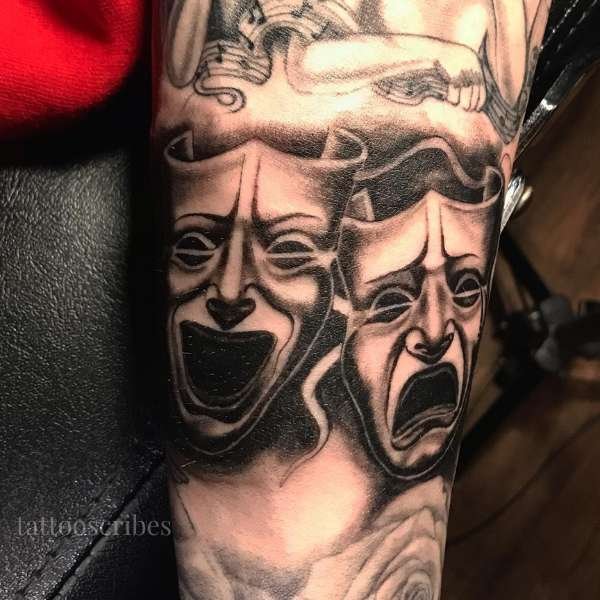
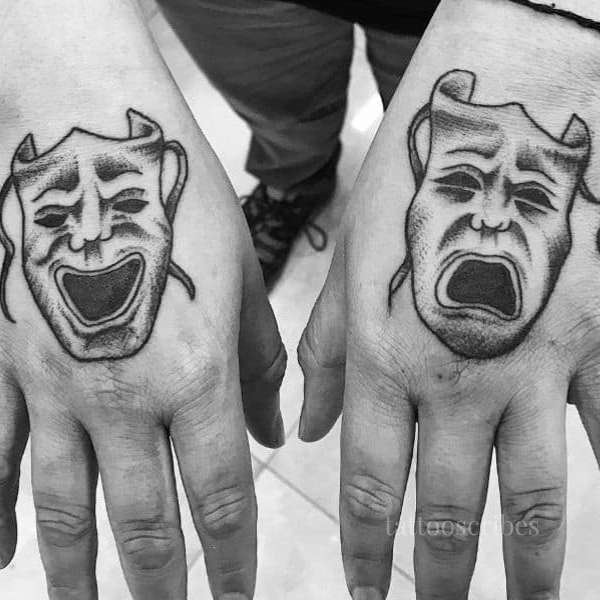
- Classic Masks – Two-faced masks, one laughing, one crying.
- Skulls – Combines mortality symbolism with emotional contrast.
- Clown Faces – Playful yet dark interpretation of joy and sadness.
- Black & Grey – Emphasizes drama, shading, and realism.
- Colorful Designs – Adds personality, energy, or intensity to the tattoo.
You may also like below posts:
Other Symbolic Meanings of Laugh Now Cry Later Tattoos
- Mindfulness – Reminder to live fully in both happiness and hardship.
- Courage – Shows bravery in facing emotional challenges.
- Authenticity – Represents being honest about feelings and life experiences.
- Mortality Awareness – A subtle reflection on life’s impermanence.
- Motivation – Encourages resilience and personal perseverance.
Learn more about choosing the perfect artist here.
Meaningful Placement Ideas
- Forearm – Visible reminder of strength and emotional balance.
- Upper Arm/Bicep – Displays power and resilience.
- Chest – Near the heart, showing personal significance.
- Back – Larger designs emphasizing duality or narrative.
- Thigh – Subtle placement for private personal meaning.
Find more aftercare tips here.
Frequently Asked Questions
What does the Laugh Now Cry Later tattoo symbolize?
It represents life’s duality, resilience, and emotional balance.
Where did the Laugh Now Cry Later tattoo originate?
It comes from comedy and tragedy masks in theater, later adopted in pop culture.
Can the tattoo represent personal struggles?
Yes, many wear it to symbolize overcoming hardships or emotional growth.
What designs are popular for this tattoo?
Masks, skulls, clowns, and black-and-grey or colorful interpretations are common.
Is it suitable for both men and women?
Absolutely, the meaning is universal and personal for anyone.
Where is the best placement for visibility?
Forearm, chest, back, or upper arm are popular for symbolism and display.
Final thought
A laugh now cry later tattoo carries more history than most people realize. It didn’t come from a Greek amphitheater. It came from a teenager drawing in a Los Angeles juvenile facility in 1974, working off a song he knew by heart.
That’s part of why the design still hits so hard fifty years later. It’s not just a symbol of duality, it’s proof that pain and creativity can turn into something people carry for life.
If you’re thinking about this tattoo, take some time with the real story behind it first. Knowing where it comes from makes the ink mean even more.